


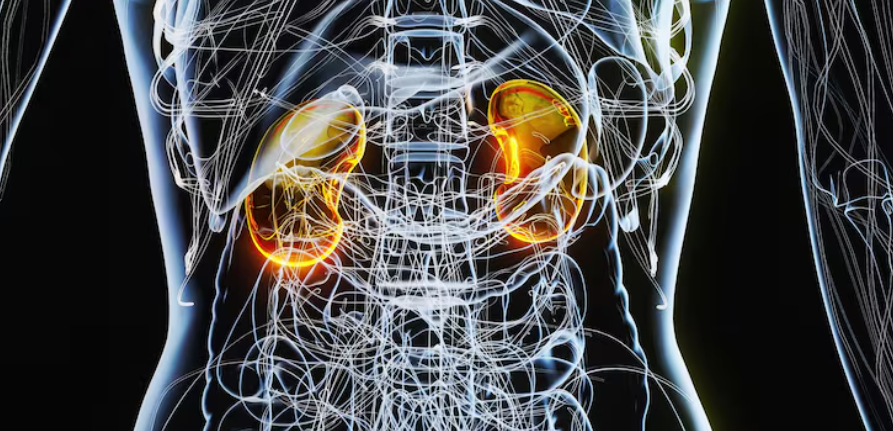
What Is the Bosniak Classification? When Can Kidney Cysts Be Dangerous?
Finding a kidney cyst during an ultrasound, computed tomography (CT), or magnetic resonance imaging (MRI) scan is a very common occurrence.
Many patients encounter terms such as:
- Bosniak 2
- Bosniak 2F
- Bosniak 3
- Bosniak 4
for the first time when reviewing their imaging reports.
These classifications often cause confusion and anxiety.
Some of the most common questions patients ask include:
- Is a kidney cyst cancer?
- Is a Bosniak 2F cyst dangerous?
- Does a Bosniak 3 cyst require surgery?
- Is a Bosniak 4 cyst definitely cancer?
The most important thing to understand is this:
Not every kidney cyst is dangerous, and not every kidney cyst is cancer.
However, some cysts require closer monitoring or treatment.
To distinguish between these different types of cysts, physicians use the Bosniak Classification System, which is the most widely accepted method for evaluating complex kidney cysts.
What Is a Kidney Cyst?
A kidney cyst is a fluid-filled sac located within the kidney.
Kidney cysts become increasingly common with age.
Many kidney cysts:
- Cause no symptoms
- Are discovered incidentally
- Require no treatment
- Never create health problems
However, some cysts may have more complex features that require further evaluation.
What Is the Bosniak Classification?
The Bosniak Classification is a radiological system used to categorize kidney cysts according to their appearance on imaging studies.
The system helps determine:
- Whether the cyst is simple or complex
- Whether follow-up is necessary
- Whether there is a risk of cancer
- Whether surgical treatment should be considered
The classification is typically based on contrast-enhanced CT or MRI imaging.
What Is a Bosniak I Cyst?
Bosniak I cysts are simple kidney cysts.
Their characteristics include:
- Thin walls
- Fluid-filled contents
- No septations
- No cancer risk
These cysts do not require treatment or follow-up.
What Is a Bosniak II Cyst?
Bosniak II cysts are also considered benign.
They may contain:
- A few thin septa
- Small calcifications
The risk of malignancy is extremely low.
In most cases, no additional follow-up is required.
What Is a Bosniak IIF Cyst?
This category is often the source of the greatest uncertainty for patients.
The letter “F” stands for “Follow-up.”
These cysts:
- Have some complex features
- Carry a low but not zero risk of malignancy
- Require periodic imaging surveillance
Most Bosniak IIF cysts remain stable over time and never become problematic.
However, regular follow-up is important.
What Is a Bosniak III Cyst?
Bosniak III cysts have more complex characteristics.
These may include:
- Thickened walls
- More prominent septations
- Contrast enhancement
The risk of malignancy is significantly higher than in Bosniak I, II, or IIF cysts.
For this reason, surgical treatment is often considered.
However, not every Bosniak III cyst is cancerous.
What Is a Bosniak IV Cyst?
Bosniak IV cysts represent the highest-risk category.
They may contain:
- Solid components
- Significant contrast enhancement
- Imaging features highly suspicious for malignancy
A substantial proportion of Bosniak IV cysts are ultimately diagnosed as kidney cancer.
For this reason, active treatment is frequently recommended.
Is a Bosniak IV Cyst Definitely Cancer?
No.
Although the likelihood of cancer is high, a definitive diagnosis can only be made through pathological examination.
Imaging studies estimate the probability of cancer but cannot provide absolute certainty.
How Are Bosniak IIF and Bosniak III Cysts Monitored?
The follow-up strategy depends on factors such as:
- Patient age
- Cyst size
- Imaging characteristics
- Overall health status
Monitoring may involve:
- Kidney MRI
- Contrast-enhanced CT
- Ultrasound examinations
The objective is to detect any changes that may indicate progression.
Does Every Bosniak III or IV Cyst Require Removal of the Entire Kidney?
No.
Today, preserving healthy kidney tissue whenever possible is a major goal.
In appropriately selected patients, robotic partial nephrectomy allows removal of the cystic tumor while preserving the remaining healthy kidney tissue.
This kidney-sparing approach provides important long-term benefits for renal function.
Why Is Early Detection Important?
Early evaluation of complex kidney cysts may:
- Prevent unnecessary surgery
- Identify potentially cancerous lesions at an earlier stage
- Increase the likelihood of kidney-sparing treatment
For this reason, adherence to recommended follow-up schedules is essential.
Conclusion
The Bosniak Classification is an important system used to assess the risk of malignancy in kidney cysts.
Bosniak I and II cysts are generally considered benign, while Bosniak IIF cysts typically require follow-up imaging. Bosniak III and IV cysts often require more detailed evaluation, and some patients may benefit from surgical treatment.
If a kidney cyst has been classified according to the Bosniak system, the most appropriate approach is to work with an experienced urology specialist to develop an individualized follow-up and treatment plan.
Assoc. Prof. Dr. Serdar Yalçın
Urology Specialist
Kidney Cysts • Bosniak Classification • Kidney Cancer • Robotic Partial Nephrectomy • Urologic Oncology